How to Ship Hazardous Materials: The Complete Compliance Guide for Small Businesses
Introduction
Shipping hazardous materials presents unique challenges that require both regulatory knowledge and practical tools. This guide explains the essential requirements small businesses must meet to remain compliant with United States Department of Transportation (DOT) and International Air Transport Association (IATA) rules. Readers will learn how to classify hazardous goods, select appropriate labels, prepare proper documentation, and implement best‑practice safety procedures. The article also recommends proven products that simplify compliance while maintaining cost‑effectiveness.
Background and Context
Hazardous materials, often abbreviated as hazmat, include substances that pose risks to health, safety, property, or the environment. The primary regulatory frameworks in the United States are the Hazardous Materials Regulations (HMR) codified at 49 CFR Part 172‑180, and the International Civil Aviation Organization (ICAO) Technical Instructions for the Safe Transport of Dangerous Goods. Both sets of rules classify materials into nine hazard classes, each with specific labeling, packaging, and documentation mandates. Understanding these classifications is the first step toward safe and legal shipment.
Small businesses frequently overlook compliance because they assume low volume shipments are exempt. In reality, any quantity that is transported for commercial purposes triggers the same labeling and documentation obligations as large carriers. Non‑compliance can result in fines, shipment delays, or even loss of licensing. Therefore, a systematic approach that integrates regulatory knowledge with reliable compliance tools is essential.
Understanding Hazardous Materials Regulations
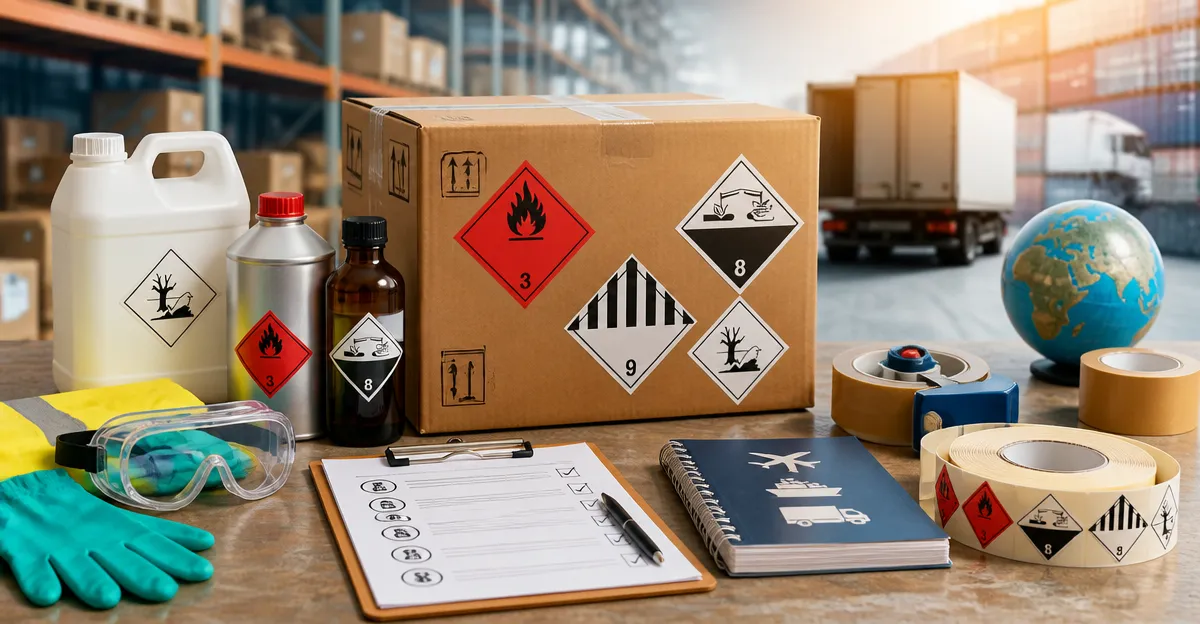
The cornerstone of hazmat compliance is accurate identification of the material’s hazard class, packing group, and proper shipping name. The classification determines the required label, the type of packaging, and the shipping papers that must accompany the load. For example, flammable liquids such as gasoline, acetone, or benzene fall under Hazard Class 3 and require a red “FLAMMABLE” label with the numeric identifier “3” at the bottom.
Regulators also require that each package display the appropriate hazard class label in a size that is clearly visible. The label size of 4 × 4 inches is the minimum dimension mandated for most Class 3 liquids. The label must be printed on semi‑gloss or vinyl stock that can withstand handling, moisture, and temperature variations.
Beyond labeling, businesses must complete a Shipper’s Declaration for Dangerous Goods, maintain a Hazardous Materials Safety Data Sheet (MSDS) for each product, and ensure that employees receive proper training. Training must be refreshed at least every three years, and records of training must be retained for the life of the employee’s involvement with hazmat.
Labeling Requirements and Product Recommendations
Labels serve as the most immediate visual cue for handlers, emergency responders, and carriers. They must conform to the color, shape, and wording specifications outlined in 49 CFR 172.101. For flammable liquids, the label must be bright red with white lettering that reads “FLAMMABLE” and the numeric hazard class at the bottom.
Small businesses often purchase pre‑printed label rolls to avoid on‑site printing errors. The Sutter Signs Flammable Liquid Labels provide 100 perforated 4 × 4‑inch stickers on semi‑gloss paper. They feature a strong adhesive, bright red color that meets Pantone standards, and a perforated backing for rapid application. With a price of $9.99 and a 4.9‑star rating from 28 reviewers, they represent a cost‑effective solution for businesses shipping up to a few hundred units per month.
For companies that require larger volumes or a broader range of hazard classes, the Kenco Flammable Liquid DOT Labels offer 500 labels per roll, printed on semi‑gloss paper with water‑based inks. Priced at $16.04 and holding a 4.4‑star rating, these labels are manufactured in the USA and meet both CFR and ICAO standards. Their larger quantity reduces per‑label cost, making them suitable for businesses with higher shipment frequencies.
When shipping lithium‑ion batteries, a separate warning label is mandatory. The Dunzoom UN3481 Battery Labels are sized 3.3 × 4.2 inches, include a blank space for phone numbers, and feature a strong adhesive that remains intact during transit. At $8.49 for 100 stickers and a 4.8‑star rating, they provide a reliable option for e‑commerce sellers and small manufacturers.
Packaging, Documentation, and Reference Materials
Proper packaging protects the product, the carrier, and the environment. The DOT requires that packaging be tested for durability, resistance to puncture, and compatibility with the material inside. For flammable liquids, UN‑rated metal drums or approved fiber drums are common choices. For batteries, inner cushioning and outer corrugated boxes are recommended to prevent short‑circuiting.
Documentation accompanies every shipment. The Shipper’s Declaration must list the proper shipping name, UN number, hazard class, packing group, and quantity. It also requires the emergency contact phone number, which can be added to the Dunzoom battery label as described earlier.
Reference manuals help staff stay current with evolving regulations. The J.J. Keller Hazmat Compliance Manual provides clear explanations of HMR requirements, includes up‑to‑date tables, and is priced at $152.35 with a 4.6‑star rating. Its ring‑bound format makes it easy to use on the shop floor.
For quick, on‑the‑go reference, the J.J. Keller Hazmat Handbook offers a spiral‑bound 464‑page guide that is updated semi‑annually. At $36.89 and a 4.5‑star rating, it delivers concise summaries, charts, and cross‑references that are valuable during routine shipments.
Comparison and Selection Guide
| Feature | Sutter Signs Flammable Liquid Labels | Kenco Flammable Liquid DOT Labels | Dunzoom UN3481 Battery Labels | J.J. Keller Hazmat Compliance Manual | J.J. Keller Hazmat Handbook |
|---|---|---|---|---|---|
| Label Size | 4" x 4" | 4" x 4" | 3.3" x 4.2" | N/A | N/A |
| Quantity per Roll | 100 | 500 | 100 | N/A | N/A |
| Material | Semi‑gloss paper | Semi‑gloss paper, water‑based ink | Strong adhesive paper | Ring‑bound book | Spiral‑bound handbook |
| Price (USD) | 9.99 | 16.04 | 8.49 | 152.35 | 36.89 |
| Average Rating | 4.9/5 (28 reviews) | 4.4/5 (15 reviews) | 4.8/5 (103 reviews) | 4.6/5 (5 reviews) | 4.5/5 (46 reviews) |
| Best For | Low‑volume flammable liquid shipments | High‑volume or multi‑class DOT labeling | Lithium‑ion battery transport | In‑depth regulatory reference | Quick reference and training |
The table highlights which product aligns with a business’s specific needs. Companies shipping a few dozen flammable containers per month may find the Sutter Signs roll sufficient, whereas a regional distributor moving hundreds of drums will benefit from the larger Kenco roll. Battery‑centric e‑commerce sellers should adopt the Dunzoom labels to meet UN 3481 requirements. Finally, both J.J. Keller publications complement label usage by ensuring that paperwork and procedural knowledge remain current.
Best Practices and Practical Tips
- Conduct a hazard classification audit before each shipment to verify that the correct UN number and hazard class are used.
- Apply labels to the outermost surface of each package, ensuring they are flat, legible, and free from wrinkles.
- Store label rolls in a dry, temperature‑controlled environment to prevent adhesive degradation.
- Maintain a master spreadsheet that records label batch numbers, purchase dates, and expiration dates (if applicable).
- Use the J.J. Keller Hazmat Handbook as a training tool for new employees; conduct quarterly quizzes to reinforce knowledge.
- When shipping batteries, include a phone number on the label as required by 49 CFR 172.101; the blank space on Dunzoom labels is designed for this purpose.
- Perform a mock inspection quarterly to simulate carrier or regulator audits; correct any deficiencies before actual shipments.
Implementing these practices reduces the likelihood of non‑compliance penalties and enhances overall safety culture. Small businesses that integrate systematic checks, reliable labeling supplies, and up‑to‑date reference materials create a resilient shipping operation.
Frequently Asked Questions
- What is the minimum label size for Class 3 flammable liquids?
- The DOT requires a label that is at least 4 × 4 inches, printed on durable semi‑gloss or vinyl material.
- Do I need a separate label for lithium‑ion batteries?
- Yes. Batteries classified under UN 3481 must display a specific caution label that includes the UN number, hazard class, and a contact phone number.
- Can I reuse labels on multiple shipments?
- No. Labels are intended for single‑use only to ensure legibility and compliance with regulatory standards.
- How often must hazmat training be refreshed?
- Training must be refreshed at least every three years, or sooner if regulations change.
- Is it acceptable to print my own labels?
- Printing in‑house is permissible only if the printer meets the exact color, size, and durability specifications required by the DOT. Pre‑printed commercial labels reduce risk.
- What documentation is required for a small shipment of flammable liquids?
- A Shipper’s Declaration for Dangerous Goods, the proper shipping name, UN number, hazard class, packing group, quantity, and emergency contact information are all mandatory.
- Do I need a separate manual for DOT regulations?
- While not legally required, a current reference manual such as the J.J. Keller Hazmat Compliance Manual greatly assists in maintaining compliance and avoiding costly errors.
Conclusion
Shipping hazardous materials safely and legally is achievable for small businesses that adopt a disciplined approach. By understanding classification, selecting compliant labels, using appropriate packaging, and consulting reliable reference manuals, businesses can protect employees, customers, and the environment. The products highlighted in this guide—Sutter Signs, Kenco, Dunzoom, and J.J. Keller publications—provide practical tools that align with regulatory requirements while remaining affordable. Continued vigilance, regular training, and periodic audits ensure that compliance remains a sustainable part of daily operations.
Products Featured in This Guide
Sutter Signs Flammable Liquid Labels
Price: $9.99 | Rating: 4.9/5 (28 reviews)
Featured because the 4" x 4" perforated red stickers meet DOT Class 3 requirements and provide a budget‑friendly option for low‑volume shippers.
Kenco Flammable Liquid DOT Labels
Price: $16.04 | Rating: 4.4/5 (15 reviews)
Featured for its larger quantity (500 labels per roll), American manufacturing, and compliance with both CFR and ICAO standards, suitable for higher‑volume operations.
Dunzoom UN3481 Battery Labels
Price: $8.49 | Rating: 4.8/5 (103 reviews)
Featured because it provides the specific UN 3481 warning label required for lithium‑ion battery shipments, with space for mandatory phone numbers.
J.J. Keller Hazmat Compliance Manual
Price: $152.35 | Rating: 4.6/5 (5 reviews)
Featured as an in‑depth, ring‑bound reference that explains HMR requirements, ideal for training and detailed regulatory research.
J.J. Keller Hazmat Handbook
Price: $36.89 | Rating: 4.5/5 (46 reviews)
Featured for its concise, spiral‑bound format that provides quick access to key DOT regulations, making it valuable for day‑to‑day operations.