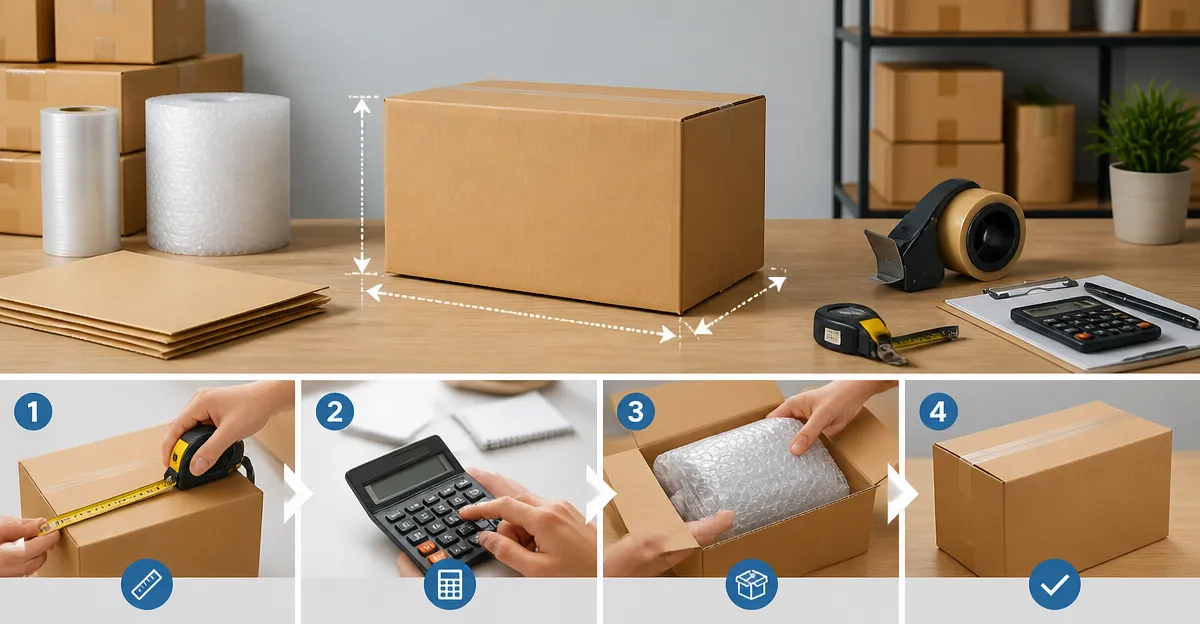
How to Avoid Dimensional Weight Charges from UPS and FedEx: A Step‑by‑Step Guide to Cut Shipping Costs
Introduction
Shipping small businesses often encounter unexpected fees when carriers apply dimensional weight pricing. This guide explains how to calculate, reduce, and prevent those charges while maintaining package integrity. Readers will learn practical measurement techniques, packing strategies, and product tools that streamline the process. By following each step, one can achieve measurable cost savings on every shipment.
What You’ll Need
- A reliable measuring tape or ruler
- A digital scale capable of weighing packages to at least one‑ounce precision
- Appropriate cardboard boxes – see product recommendations below
- Packing tape, bubble wrap, and filler material
- Access to carrier rate calculators or shipping software
Step 1: Measure Accurately
Begin by measuring the length, width, and height of each item or bundled shipment. Use a steel tape measure and record dimensions in inches, rounding up to the nearest whole number as carriers do. Place the item on a flat surface and measure the longest side as length, the next longest as width, and the smallest as height. Accurate measurements prevent the carrier from inflating the dimensional weight based on oversized packaging.
Step 2: Calculate Dimensional Weight
Dimensional weight is derived by multiplying length, width, and height, then dividing by the carrier’s divisor (139 for UPS and FedEx in the United States). The formula is (L × W × H) ÷ 139 = Dimensional Weight (lb). Compare this figure with the actual weight measured on the scale; the carrier will bill the higher of the two. Performing this calculation before packaging allows you to decide whether a lighter box can lower the dimensional weight.
Step 3: Choose the Correct Box Size
Selecting a box that closely matches the item’s dimensions is the most effective method to reduce dimensional weight. Oversized boxes add unnecessary volume, while boxes that are too small risk damage. For small accessories, the SPEPLA Small Shipping Boxes provide an 8×6×4‑inch footprint that aligns with many jewelry, cosmetics, and electronic components. These boxes are lightweight, recyclable, and priced at $24.29 with a 4.6‑star rating from over 1,400 reviewers.
When shipping medium‑sized products such as books, small electronics, or apparel, the Box USA Medium Shipping Boxes offer a 12×9×4‑inch interior that balances strength and volume. Constructed from 200‑# corrugated cardboard, they support up to 65 lb and carry a 4.7‑star rating from 963 customers, priced at $26.96.
For businesses that require flexibility across multiple product sizes, the RLAVBL Assorted Shipping Boxes include three dimensions (8×6×4, 9×6×4, 10×7×5) in a 30‑box pack. This variety enables one to choose the smallest possible box for each order, minimizing dimensional weight while retaining protection. The pack costs $25.99 and holds a 4.7‑star rating from 4,512 reviewers.
For boutique clothing retailers, the Durlaxi Self‑Sealing Shipping Boxes measure 11×8×3 inches and eliminate the need for tape, reducing preparation time. Their built‑in adhesive strip ensures a secure seal without adding bulk, and the boxes are rated 5 stars by 13 reviewers at $31.99.
If a business prefers a mixed‑size assortment with a slightly larger footprint, the Eupako Assorted White Shipping Boxes provide three sizes (9×6×4, 10×7×5, 11×6×6) in a 30‑box collection. Their sturdy construction and clean white finish support branding efforts, priced at $26.49 with a 4.4‑star rating from 600 customers.
Step 4: Optimize Packing Density
After selecting the appropriate box, fill any remaining voids with lightweight filler such as crumpled paper, air pillows, or biodegradable packing peanuts. Over‑filling can increase actual weight, while excessive empty space raises dimensional weight. Aim for a snug fit that prevents movement but does not compress the product.
When shipping fragile items, wrap each piece in a thin layer of bubble wrap before placing it in the box. This adds minimal volume while providing essential cushioning. For irregularly shaped objects, use custom‑cut cardboard inserts to occupy gaps without adding significant weight.
Step 5: Use Self‑Sealing Boxes for Efficiency
The Durlaxi Self‑Sealing Shipping Boxes streamline the sealing process by eliminating tape. The adhesive strip creates a tamper‑resistant closure that maintains box rigidity, which can marginally reduce measured dimensions compared with tape‑bulked edges. This feature is especially valuable for high‑volume operations where speed and consistency affect labor costs.
Because the boxes are pre‑scored, workers can fold and seal each package in under ten seconds. The built‑in tear strip also improves the customer experience, allowing recipients to open the package without scissors. These advantages translate into lower handling time and fewer errors that could lead to re‑packing and additional carrier fees.
Step 6: Review Carrier Billing and Adjust
Before finalizing each shipment, input the measured dimensions and weight into the carrier’s online rate calculator. Verify that the billed amount reflects the lower of actual or dimensional weight. If the calculation shows a dimensional weight charge, revisit the packaging step to determine whether a smaller box or reduced filler could have prevented the charge.
Maintain a spreadsheet that records package dimensions, weight, and final cost for each carrier. Over time, this data reveals patterns such as recurring oversized packaging or weight thresholds that trigger higher fees. Use the insights to negotiate bulk rates or to refine your packaging standards.
Tips & Pro Tips
- Always round dimensions up; carriers do not round down.
- Consider flat‑rate boxes for shipments that fall below the carrier’s weight limit, as they may be cheaper than dimensional pricing.
- Label boxes with the measured dimensions to avoid re‑measurement errors at the carrier facility.
- Invest in a calibrated digital scale to ensure weight accuracy within 0.1 lb.
- When possible, ship multiple items in a single box that still meets dimensional guidelines, reducing the number of individual charges.
Troubleshooting
Problem: Dimensional weight remains higher than expected despite using a smaller box.
Solution: Verify that the box interior dimensions, not the external dimensions, are used in the calculation. Remove any excess tape or label overhang that may increase length, width, or height.
Problem: Package is damaged during transit.
Solution: Add a thin layer of reinforced cardboard or increase bubble wrap without significantly expanding the box’s outer dimensions. Consider upgrading to a heavier‑weight box such as the Box USA Medium Shipping Boxes for added strength.
Conclusion
By measuring precisely, calculating dimensional weight, selecting the most fitting box, and optimizing packing density, one can substantially lower shipping expenses with UPS and FedEx. The recommended tools – from the compact SPEPLA Small Shipping Boxes to the time‑saving Durlaxi Self‑Sealing Boxes – provide practical solutions that align with these principles. Implement the steps consistently, monitor carrier invoices, and adjust packaging practices to sustain long‑term cost efficiency.
Products Mentioned in This Guide
Frequently Asked Questions
What is dimensional weight and why do UPS and FedEx charge it?
Dimensional weight is a pricing method that uses a package's volume (length × width × height) instead of its actual weight, charging more for bulky but light shipments.
How do I calculate dimensional weight for a UPS or FedEx package?
Divide the package volume in cubic inches by the carrier’s divisor (usually 139 for UPS/FedEx) and round up; compare that number to the actual weight and use the higher value.
What simple packing changes can lower dimensional weight charges?
Use appropriately sized boxes, eliminate excess filler, and flatten items when possible to reduce length, width, and height.
Which tools are essential for measuring and weighing parcels accurately?
A steel measuring tape or ruler, a digital scale that measures to at least one‑ounce precision, and a reliable rate‑calculator or shipping software.
Can carrier rate calculators help prevent unexpected dimensional weight fees?
Yes, entering exact dimensions and weight into a rate calculator shows the chargeable weight before shipping, letting you adjust packaging to avoid extra fees.