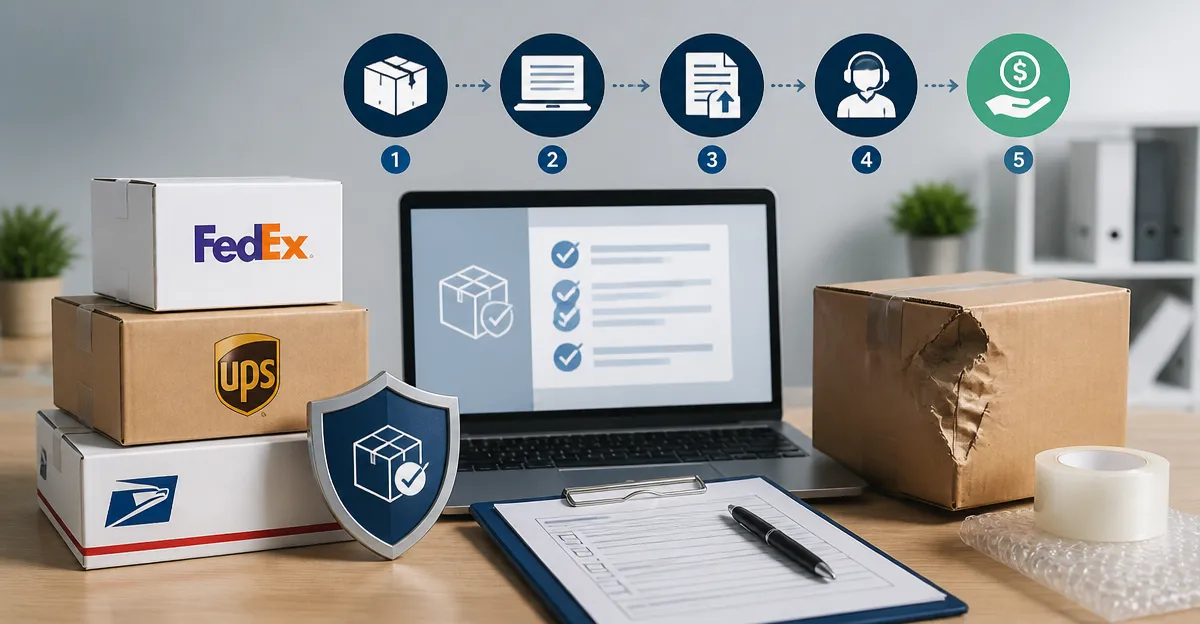
Introduction
The reader will learn how to prepare, submit and follow up on insurance claims with the three major carriers in the United States. Understanding the procedural nuances of USPS, UPS and FedEx reduces the time required to receive reimbursement. The guide emphasizes documentation, communication and the strategic use of reference materials. By following the steps, one can avoid common delays and achieve a swift resolution.
What You’ll Need
- Original shipping receipt and tracking number.
- Proof of value such as invoices, receipts or appraisals.
- Photographic evidence of damage or loss.
- Access to a reliable reference on maritime and cargo insurance, for example Marine Cargo Insurance.
- A notebook or digital tool to record correspondence.
Step 1: Review Your Policy and Coverage
Before initiating any claim, one must confirm that the shipment was covered by the carrier’s insurance or a third‑party policy. Examine the terms, deductible amounts and time limits for filing; most carriers require a claim within 30 days of delivery confirmation. The comprehensive analysis provided in Marine Cargo Insurance offers insight into clause interpretation, making it easier to identify applicable coverage. This Kindle edition is priced at $465.00 and holds a perfect 5‑star rating from a reviewer, indicating its authority. Understanding the policy prevents unnecessary disputes and clarifies the compensation you are entitled to receive.
Step 2: Gather Supporting Documentation
Accurate documentation is the cornerstone of a successful claim. Collect the original shipping label, proof of delivery, and any correspondence that confirms the loss or damage. Photographs taken immediately after discovery of damage serve as visual proof; ensure that each image captures the item from multiple angles. For legal context and best‑practice standards, consult The ISM Code Guide, a hardcover priced at $57.01 with a 4‑star rating, which explains how the International Safety Management Code influences liability assessments in maritime transport. The guide’s emphasis on record‑keeping aligns with carrier expectations and can be cited if a dispute arises.
Step 3: Initiate the Claim with the Carrier
Each carrier provides a distinct online portal or phone line for claim submission. For USPS, log into the USPS Informed Delivery system and select “File a Claim” under the “Insurance” tab. UPS requires the use of the UPS Claims portal, where the tracking number and incident description are entered. FedEx offers a similar web‑based claim form accessible through the FedEx Ship Manager. When completing these forms, reference the policy language highlighted in Marine Cargo Insurance to accurately describe the breach of coverage. Including the concise summary from the reference material demonstrates professionalism and may accelerate processing.
Step 4: Follow Up and Maintain a Communication Log
After submission, carriers typically issue a claim reference number; record this number alongside the date of filing. Schedule periodic follow‑ups, preferably every five business days, using the carrier’s customer service channels. Document each interaction, noting the representative’s name, the information provided and any promised actions. The book How to Beat Your Insurance Company (price $9.99, rating 4.5/5) offers negotiation tactics that can be applied when a carrier offers a settlement lower than expected. Applying those tactics—such as requesting a detailed explanation of the adjustment—often results in a more favorable outcome.
Step 5: Resolve the Claim and Receive Reimbursement
Once the carrier approves the claim, they will issue a reimbursement via the original payment method or a check. Verify that the amount matches the documented loss, accounting for any deductible stipulated in the policy. If the payout is insufficient, reference the clauses discussed in Marine Insurance Legislation, a hardcover priced at $159.25 with a 4.4‑star rating, to formulate a formal appeal. The legislation text provides annotated excerpts of the Marine Insurance Act 1906, which can be cited to support a claim for full compensation. Retain all final correspondence for future reference, as it may be required for tax reporting or further disputes.
Tips & Pro Tips
- File the claim within the carrier’s stipulated time frame; late filings are often denied.
- Use high‑resolution photographs; blurry images are frequently rejected as insufficient evidence.
- When possible, obtain a written statement from the carrier’s delivery personnel confirming the condition of the package upon receipt.
- Leverage the negotiation strategies from How to Beat Your Insurance Company to request a higher settlement if the initial offer appears low.
- Maintain a digital backup of all documents in a cloud folder to prevent loss due to hardware failure.
Troubleshooting
- Claim rejected for insufficient evidence: Re‑submit with additional photos, a detailed inventory list and, if available, a third‑party appraisal.
- Carrier does not respond within the promised window: Escalate the issue by contacting the carrier’s corporate complaints department and reference the policy language from Marine Cargo Insurance.
- Partial reimbursement received: Review the deductible clause and, if the deduction seems unjustified, file an appeal citing the relevant sections of Marine Insurance Legislation.
Conclusion
This guide has outlined a clear, step‑by‑step process for filing insurance claims with USPS, UPS and FedEx. By reviewing coverage, gathering thorough documentation, using carrier portals, maintaining a communication log and leveraging authoritative reference works, one can achieve a fast and fair reimbursement. The recommended products provide legal insight, negotiation techniques and industry best practices that enhance claim success. Readers are encouraged to apply these methods promptly to protect their financial interests and to keep the recommended resources within easy reach for future shipments.
Products Mentioned in This Guide
Frequently Asked Questions
What documents are required to file a shipping insurance claim with USPS, UPS, or FedEx?
You need the original receipt, tracking number, proof of value (invoice or appraisal), and photos of the damage or loss.
How long do I have to submit a claim after discovering damage or loss?
Most carriers require a claim within 30‑45 days of delivery, but check each carrier’s specific deadline.
Do I need to file a claim with the carrier or can I use a third‑party insurer?
File with the carrier if the shipment was insured by them; otherwise submit the claim to your third‑party insurer following their guidelines.
What is the typical deductible for carrier‑provided shipping insurance?
Deductibles vary by carrier and coverage level, commonly ranging from $25 to $100 per claim.
How can I track the status of my insurance claim?
Use the carrier’s online claim portal or keep a digital log of reference numbers and correspondence for follow‑up.